


Cycle Awareness: The First Step Toward Greater Self-Care
24 February 2026
How hormones, health, and everyday life are connected within the female monthly rhythm
There are days when you feel clear, strong, and full of energy. And others when your body calls for more rest, your mood feels more sensitive, or your need for closeness becomes stronger. These changes are not random. They follow a biological rhythm: the menstrual cycle.
The menstrual cycle is far more than menstruation itself. It is a finely tuned interplay of hormonal changes that not only regulates fertility but also influences energy, concentration, sleep, appetite, stress processing, and even desire. Yet socially, it is often reduced to a few days of bleeding, as if it were merely a minor monthly event.
In reality, the menstrual cycle is a central element of women’s health. Those who begin to consciously observe their own cycle phases develop a deeper understanding of their bodies and their needs. Cycle awareness does not mean being controlled by hormones. It means recognizing your own rhythm and using it as a resource for health, everyday life, and intimacy.
The Hormonal Control Center
The supposedly perfect 28-day cycle is still widely considered the ideal. In fact, it is only an average. A healthy menstrual cycle typically lasts between 21 and 35 days and can vary individually. What matters less is the exact length and more a certain regularity and the absence of significant cycle disorders.
The menstrual cycle is regulated through the so-called hypothalamic–pituitary–ovarian axis, a finely coordinated interaction between the brain and the ovaries. Four hormones play a central role: estrogen, progesterone, follicle-stimulating hormone, and luteinizing hormone. They ensure that an egg matures each month, ovulation occurs, and the uterine lining prepares for a possible pregnancy. If fertilization does not occur, the lining is shed and menstruation begins.
However, these hormonal changes affect far more than reproduction. They influence the immune system, metabolism, and mental well-being. Regular monthly bleeding can contribute to long-term iron deficiency, which may promote fatigue or exhaustion. At the same time, hormonal fluctuations affect emotional balance. Particularly in the second half of the cycle, many women report increased sensitivity, irritability, or changes in energy levels.
The menstrual cycle is therefore not an isolated biological event but a system that extends far beyond the uterus.
Four Phases – One Inner Rhythm
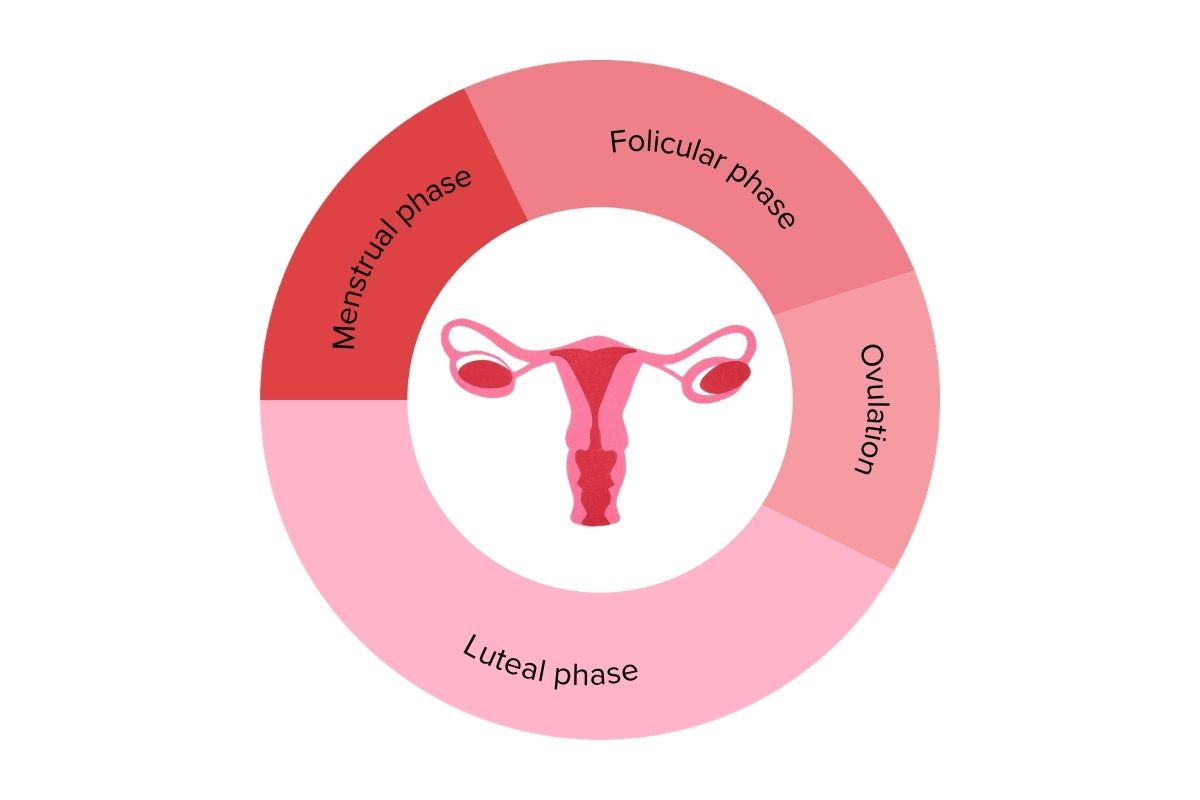
Although every menstrual cycle is individual, it can be divided into four distinct hormonal phases.
Menstrual Phase: The menstrual phase marks the beginning of the menstrual cycle and lasts on average three to seven days. If the egg is not fertilized, estrogen and progesterone levels drop. The built-up uterine lining is shed and bleeding begins. Many women experience a greater need for rest or heightened sensitivity to stress during this time. The hormonal decline can influence pain perception and mood. Scientific research supports this connection. For example, the study by Li et al. (2025, “Hormonal Fluctuations and Mood Disorders Across the Menstrual Cycle”) shows that hormonal fluctuations affect specific brain regions and neurotransmitters through neurobiological mechanisms.
Follicular Phase: In the subsequent follicular phase, estrogen levels rise steadily. At the same time, the pituitary gland releases follicle-stimulating hormone, allowing a new egg to mature. This phase lasts on average seven to ten days. Many women report increasing energy, clearer thinking, and higher motivation during this time. Estrogen has an activating effect on the central nervous system.
Ovulatory Phase: Around the middle of the cycle, ovulation takes place. A surge in luteinizing hormone triggers the release of the mature egg. Estrogen reaches its peak during this time. The ovulatory phase lasts only a few days and represents the most fertile period of the cycle. Since sperm can survive in the body for several days, the fertile window spans approximately five to six days. Many women feel particularly energetic, confident, and desirous during this phase. Those who wish to conceive have the highest chance of fertilization around ovulation. Without a current desire for pregnancy, reliable contraception is especially important during this time.
Luteal Phase: After ovulation, the luteal phase begins and lasts on average ten to fourteen days. Progesterone now dominates the hormonal landscape. It has a calming effect, slightly raises body temperature, and prepares the uterus for possible implantation. If pregnancy does not occur, progesterone levels drop again. In some women, this hormonal decline leads to premenstrual symptoms, including breast tenderness, bloating, headaches, fatigue, irritability, or mood swings. The intensity of these symptoms varies greatly between individuals.
The Cycle as a Health Indicator
A regular menstrual cycle is much more than a sign of fertility. Changes in the menstrual cycle can indicate overall health status. Absent or highly irregular bleeding may be associated with thyroid disorders, chronic stress, significant underweight, intense athletic training, or hormonal imbalances. An imbalance of estrogen or progesterone can also cause fluctuations. If the cycle is consistently very short, very long, or marked by severe premenstrual symptoms, medical evaluation is advisable.
Unusually heavy or very painful bleeding, persistent pelvic pain, or pain during intercourse may also indicate medical conditions, including endometriosis, in which tissue similar to the uterine lining grows outside the uterus. Symptoms vary widely and range from mild discomfort to severe pain that significantly affects daily life. Early gynecological evaluation helps identify causes, relieve symptoms, and prevent potential long-term consequences.
This is why it is worthwhile not simply to endure your cycle but to observe it consciously. It provides valuable insights into the interaction of hormones, metabolism, and stress responses. Cycle awareness can help identify changes early and support informed health decisions.
Recognizing Fertile Days
Those who wish to determine ovulation can use various methods. The calendar method is based on previous cycle lengths and is mainly suitable for very regular cycles. Digital cycle trackers and apps help record menstruation data and physical parameters such as basal body temperature or cervical mucus. They offer practical guidance but provide only estimates.
Natural Family Planning is considered a scientifically recognized hormone-free method. It combines observation of basal body temperature, cervical mucus, and additional physical signs to determine the fertile phase as precisely as possible. When applied consistently, it can support pregnancy planning and deepen understanding of one’s menstrual cycle.
However, no method provides one hundred percent certainty. Anyone wishing to avoid pregnancy should consider combined contraceptive measures if necessary.
Hormonal Contraception and the Natural Cycle
Worldwide, many women use modern contraceptive methods, including hormonal options such as the birth control pill or hormonal IUDs. According to the United Nations, the pill, condoms, and intrauterine devices are among the most widely used modern contraceptive methods worldwide. More than 150 million women use oral hormonal contraceptives, and approximately 189 million use condoms. Overall, around 45 percent of women of reproductive age worldwide use these and other modern contraceptive methods.
Hormonal contraceptives work by suppressing ovulation and continuously sending hormonal signals that prevent fertilization. As a result, the natural menstrual cycle is altered and hormonal fluctuations are flattened. Data from the National Survey of Family Growth show that contraceptive use varies by age group. Certain methods, such as oral contraceptives or long-acting reversible contraceptives, are used more frequently in specific life stages. These differences are linked to changing life phases, health considerations, and a growing desire for autonomy.
A measure of contraceptive reliability is the Pearl Index. It describes how many out of 100 sexually active women become pregnant within one year despite using a specific method. The lower the value, the higher the reliability. Hormonal methods such as the pill have very low Pearl Index values when used correctly, while barrier methods such as condoms have higher values, mainly due to user errors.
In addition to preventing unintended pregnancy, hormonal methods may offer benefits such as more regular bleeding or relief from certain premenstrual symptoms. At the same time, natural hormonal fluctuations are suppressed, along with the cyclical changes in energy, mood, or libido that occur during an uninfluenced cycle.
Many women particularly notice bodily changes after discontinuing hormonal contraception and experiencing a natural cycle again. For some, this leads to a stronger interest in understanding their hormonal rhythm and living more cycle-consciously. Cycle awareness does not mean rejecting contraception. It means making informed decisions about your body and health.
Cycle Awareness in Everyday Life
In recent years, interest in consciously cycle-oriented living has grown significantly. This is less about strict rules and more about developing a sensitive awareness of hormonal changes and their influence on energy, mood, and resilience.
Those who begin to recognize these patterns often notice that certain phases feel different. There are times when concentration and productivity come more easily, and others when the need for withdrawal or regeneration increases. This knowledge often shifts the perspective on everyday life. Some women schedule appointments or projects according to their energy levels. Others adapt their training to different cycle phases, choosing more intense or deliberately restorative sessions depending on the phase. Still others focus more strongly on rest and stress reduction in the second half of the cycle.
Cycle awareness primarily means perceiving your own rhythm and integrating it constructively into your life.
Cycle awareness refers to the natural hormonal pattern. Hormone-free contraceptive methods make cyclical changes easier to perceive and interpret. Many women also use this phase to reflect more consciously on environmental factors, including endocrine disruptors – chemical substances that can mimic hormones, such as certain plasticizers, parabens, or bisphenol A in plastics. The aim is to reduce potentially burdensome influences in daily life and support women’s health.
Cycle knowledge does not mean being ruled by hormones. It means acknowledging biological rhythms and engaging with them responsibly. Understanding your body helps you perceive your needs more clearly, communicate boundaries more consciously, and shape intimacy more mindfully.
Nutrition in Harmony with the Cycle
The female body does not require the same support throughout the menstrual cycle. Depending on the phase, energy requirements, metabolism, and possible symptoms change. Cycle-aware nutrition considers these natural fluctuations and can help promote physical balance.
During the menstrual phase, iron is lost through bleeding. Iron-rich foods such as leafy green vegetables, legumes, nuts, or seeds can help replenish stores. Foods rich in vitamin C additionally support iron absorption.
In other cycle phases, it may be helpful to focus on sufficient protein, complex carbohydrates, and healthy fats. These nutrients help stabilize energy levels and support hormonal processes. Since hormonal changes influence hunger, mood, and performance, nutrition can also remain flexible.
Cycle-oriented nutrition is primarily about listening to your needs and nourishing your body with foods that provide strength and well-being.
Giving the Menstrual cycle Conscious Space
Sex education in schools often focuses mainly on the reproductive aspect of the cycle. The period is explained, hormonal fluctuations are mentioned, but there is often little room for a comprehensive understanding of how strongly hormones influence mood, energy, performance, and body awareness. Yet the menstrual cycle is a central component of women’s health.
An informed approach to one’s body strengthens self-perception and the ability to interpret changes. Those who know their cyclical patterns can better balance stress and recovery, recognize physical signals earlier, and seek medical advice when necessary.
The menstrual cycle follows a natural rhythm. Understanding it does not mean surrendering to it but acknowledging it as part of one’s biological reality. This knowledge creates security, fosters autonomy, and can also make experiences of closeness, desire, and intimacy more conscious.
Cycle awareness is therefore not a trend but a step toward sustainable health and a respectful relationship with one’s own body.
This article is intended for educational purposes and guidance. It does not replace individual medical advice. If you have health-related questions or symptoms, always consult a qualified healthcare professional.