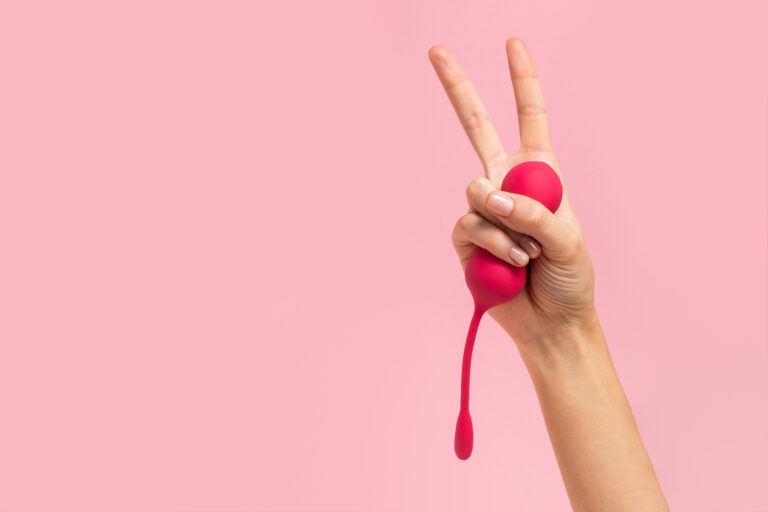


From a Medical Device to a Symbol of Self-Determination: The History of the Vibrator
21 April 2026
What does a product say about our society? About taboos, pleasure, and self-determination? Hardly any object makes this development as visible as the vibrator. What today stands for sexual wellness, empowerment, and an open approach to intimacy once began as a medical device. Its history tells of social norms, cultural ruptures, and how our view of sexuality has changed over decades. It also shows how closely intimacy is connected to curiosity, education, and the courage to question existing ideas. This is exactly what we at pjur stand for: inviting people to consciously, self-determinedly, and openly rediscover intimacy. Against this background, we spoke with an expert who has been working for years on precisely these areas of tension: certified sex educator, author, and cultural scientist Dr. Nadine Beck. “I love looking where others don’t like to look, thinking differently, and questioning social norms and taboos.” Her research makes it clear: products like vibrators are far more than mere consumer goods. They always tell stories of power structures, gender roles, shame, freedom, and societal change in dealing with sexuality.
How Research Became a Cultural Topic
Nadine Beck’s approach to the topic initially came about rather by chance. Originally, she wanted to focus her doctoral thesis on sexuality in nursing homes, also a highly tabooed social field. In the course of professional research on the company Beate Uhse, she came across vibrators from the 1970s with unusual names such as “Muschibär,” “Doppel-Bock,” or “Strammer Max.” This discovery became the starting point for a much larger question: “I asked myself what the cultural history of the vibrator actually is. The vibrator is not just a sex toy. It is a cultural artifact that reveals a great deal about social norms, taboos, and the handling of female sexuality at a given time.”
She quickly realized that there is surprisingly little academic literature on the subject, even though the vibrator has long been part of everyday society and celebrated its 150th anniversary in 2019. This very gap makes the topic so relevant. Because the vibrator is far more than a product. It is a mirror of social developments, an expression of self-determination, and a symbol of how our relationship to pleasure and body knowledge has changed.
From Treatment Device to Everyday Helper: The Beginnings of the Vibrator
The origins of the vibrator clearly lie in the medical field: in the late 19th century, doctors such as George H. Taylor and Joseph Mortimer Granville developed the first mechanical and electrical devices to treat physical ailments. Taylor’s steam-powered “Manipulator” (1869) and Granville’s electric “Percuteur” (1883) were primarily used to relieve muscle tension, nervous disorders, and circulatory problems—not for sexual purposes, as is often mistakenly assumed. With advancing electrification, vibrators increasingly found their way into private households at the beginning of the 20th century, where they were marketed as cosmetic aids for skin tightening, improving circulation, and relaxation. Thus, the vibrator gradually developed from a purely medical instrument into a body care product, long before it underwent a fundamental social and cultural transformation from the 1960s onward.
Technological Progress and Design as a Reflection of the Times
With the sexual revolution, social upheavals, and new ideas about female pleasure, the perception of the vibrator also changed. In West Germany, 1969 marked a turning point when Beate Uhse first included phallic-shaped, battery-operated vibrators in her catalogs. What seems natural today was highly controversial at the time. “It quickly became clear to me: I want to write about something that is constantly happening, but that nobody talks about.”
Between Taboo and Creativity
Social prohibitions never prevented use, but often led to creative solutions. A frequently cited example is the GDR. “In the GDR, vibrators were officially banned.” They were considered pornography, which is why people instead used devices such as electric toothbrushes, razors, or other vibrating everyday objects. These developments make it clear that pleasure, curiosity, and the desire to explore one’s own body are deeply rooted in human nature. They escape social control and always find a way to be expressed. This is precisely why open education is so important: it creates space for an honest approach to intimacy and helps to break down prejudices and taboos instead of merely bypassing them.
Pop Culture as a Turning Point: Sex and the City
Most people know the series about Samantha, Carrie, Charlotte, and Miranda, but few know that “Sex and the City” significantly contributed to the success of a very specific vibrator. In the iconic episode “The Turtle and the Hare” (1998), Charlotte discovers the so-called rabbit vibrator. What begins cautiously and curiously quickly turns into enthusiasm. Charlotte is so delighted by her discovery that she cancels dates to stay at home with her toy. This episode had an enormous cultural impact. It not only sparked great interest in the “Rabbit” but also helped break a social taboo: female pleasure was suddenly addressed openly, humorously, and naturally. While vibrators had previously often been seen as something secretive or even shameful, the series changed perceptions sustainably. Interesting to know: the manufacturer of the vibrator, the company Vibratex, noticed a sudden increase in sales but initially did not know where it came from. Only after receiving a VHS recording of the episode did the connection become clear. The effect was enormous, and in the following years, annual sales increased by more than 700%.
Practical experience also confirms the hype: Carol Queen from the well-known shop Good Vibrations reports that the day after the broadcast, a line of customers formed in front of the store. Many specifically asked for the “Rabbit,” which sold out within a very short time. To this day, the episode is considered an important turning point that significantly contributed to destigmatizing vibrators and making them an open topic in society.
Myths About Vibrators: What Is Really True?

Many misconceptions about vibrators persist to this day. “A surprising realization for me was that early massage devices had nothing to do with sex.” The widespread myth that vibrators were invented to treat female “hysteria” still persists. Historically, however, this is not correct. “This whole theory that they were invented and used by doctors to cure women of so-called ‘hysteria’ is false.” Instead, early devices were used medically, for example to treat muscle tension, circulatory problems, or nervous disorders.
“One of the most persistent myths is that vibrators are ‘unnatural,’ numb the nerves, or are only for women”, the so-called “Dead Vagina Syndrome.” There is no scientific evidence to support this. On the contrary, studies show that the use of vibrators can increase body awareness and sexual satisfaction. The idea that vibrators replace or destroy relationships is also false. On the contrary, they can promote communication and help couples address their needs more openly.
Conclusion: What We Can Learn from History
The history of the vibrator is far more than the development of a single object. It reflects profound social change in dealing with the body, pleasure, and self-determination. From a medical instrument to a long-tabooed object to a symbol of sexual autonomy, it shows how perspectives can shift when knowledge, openness, and social dialogue grow.
Today, the vibrator stands not only for individual pleasure but also for the right to explore and understand one’s own body without shame. Knowing oneself better creates the foundation for greater self-determination, genuine well-being, and authentic closeness to oneself and to others. Especially in a time when sexuality has become more visible but is still often accompanied by uncertainties and old patterns of thinking, education remains essential. It helps to break down prejudices, open up new perspectives, and promote a confident, healthy approach to one’s own sexuality.
The Development of the Vibrator at a Glance
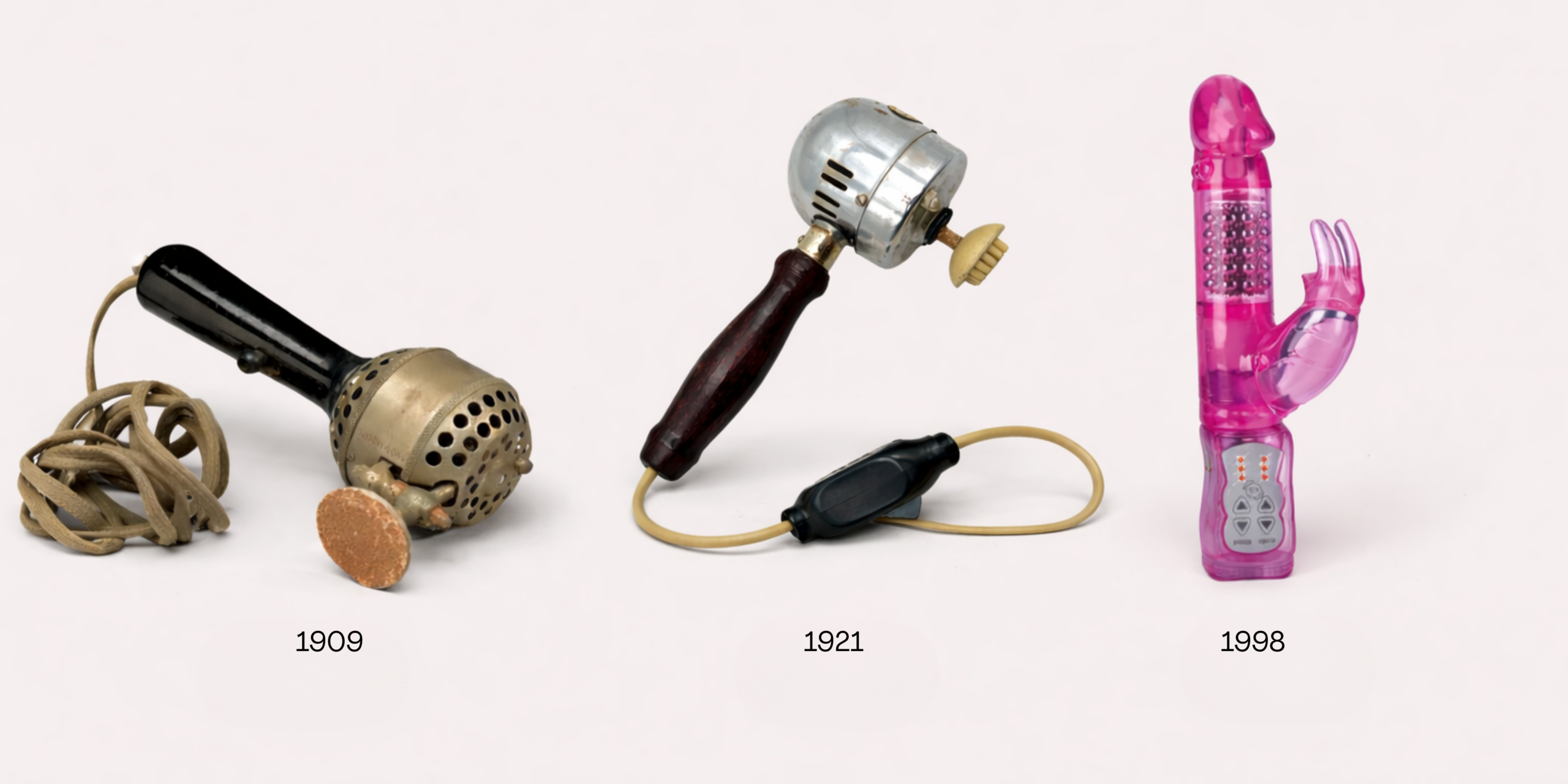
Late 19th Century (approx. 1880–1900)
• First electric vibrators are developed
• Primarily used in medicine
• Large, mechanical devices, often used by doctors
Early 20th Century (1900–1920)
• Introduction into private households
• Marketed as cosmetic devices with attachments for facial, neck, and body massages
• Sold via mail order companies, medical supply stores, and pharmacies
1960s–1970s (Sexual Revolution)
• First sex shops emerge
• Shift in the understanding of sexuality
• First vibrators clearly designed as pleasure products
• Battery-operated, more compact devices
• Inclusion in catalogs such as those of Beate Uhse
• Beginning of open engagement with female pleasure
1980s
• Development of modern designs (e.g., rabbit design)
• Battery-operated, more compact devices
• Early counter-movements such as Alice Schwarzer’s PorNo campaign
• Vibrators become more widely known but remain taboo
1990s (Pop Culture & Visibility)
• Greater social acceptance
• Turning point through pop culture, e.g., Sex and the City (1998)
• Vibrators become part of public conversations
• Silicone replaces rubber in sex toys for the first time
2000s to Today
• Focus on design, ergonomics, and aesthetics
• Vibrators as part of sexual wellness and self-care
• More open social approach to intimacy and cultural acceptance, e.g., through presence in museums
• Integration of apps and VR
• Medical recognition, e.g., in sexual therapy
FAQ: Frequently Asked Questions About the History of the Vibrator
When was the first vibrator invented?
The first motorized vibrator, the “Manipulator,” was developed in 1869 by George H. Taylor as a medical massage device for doctors.
Was the vibrator originally used to treat hysteria?
No. This myth is not historically proven. Early devices were used for medical applications such as muscle and nerve treatments.
Is the vibrator still used medically today?
Yes, among other things in sexual therapy, pelvic floor rehabilitation, pain therapy, physiotherapy, or for breast engorgement. It is also used as a medical device in physiotherapy practices and for sports injuries or in diagnostics for erectile dysfunction.
When did the vibrator become mainstream in society?
An important turning point was the pop culture of the 1990s, particularly through Sex and the City.
Can frequent use reduce sensitivity?
No, reduced sensitivity due to frequent use is not scientifically proven. Many women report that frequent vibrator use leads to greater sexual satisfaction and better body awareness. It can be compared to other sensory perceptions. What develops is more of a habituation effect and muscle training.
Can I use any lubricant with any vibrator?
In general, not every lubricant is suitable for every material. Especially with silicone vibrators, care should be taken not to use silicone-based lubricants, as they can damage the surface of the material.
Water-based lubricants like pjur AQUA are best suited in this case, as they are gentle on materials and can be used with most toys without problems. Hybrid lubricants can also be used with vibrators. The creamy consistency of pjur TOY LUBE allows for easy dosing and very precise application to the sex toy. It stays where it is applied and ensures convenient handling, while materials such as latex, rubber, glass, and high-quality silicone are not damaged.
About Dr. Nadine Beck

Dr. Nadine Beck is a certified sex educator (PfS), author, curator, and cultural scientist with a doctorate. She was born in 1976 in Marburg and studied cultural studies and art history in Marburg, Jena, and England. She works as an author, photographer, and exhibition curator. In 2019, as part of her doctoral thesis on the history of the vibrator, she published the illustrated book “Plug + Play. 150 Jahre Vibrator. Ein Jubelband,” followed in 2024 by her dissertation “„Der vibrierenden Dildo“. Parts of her collection of historical sex toys can be seen, among other places, as VIBRATORIUM in the Erotic Art Museum in Hamburg. She appears in various podcasts, print, and TV formats as a sex expert, educator, artist, and advocate for the destigmatization of sexuality, pleasure, and masturbation.
As a guest on the sex podcast “Geliebte auf Zeit,” she dives even deeper into the history of sex toys with listeners.
In 2022, her educational book “SEX IN ECHT” (Beck/Schilling) was published and nominated for the 2023 Youth Literature Prize; in 2025 followed the exhibition “WHY NOT? 150+ Years of Vibrators, Sex & Taboos” as well as the books „PENIS!“ (Berkels/Beck) and „VULVA!“ (Schilling/Beck). She also conceptualized the video tutorial „FEMALE PLEASURE” together with sex coach Tina Molin, focusing on female pleasure and anatomy.
Her trademark is a clear, shame-free language, authenticity, joy of life, and humor combined with scientifically grounded educational work.
Nadine Beck lives and works in Hamburg.