

Sexuality and Disability: How Sexual Companionship Can Strengthen Confidence and Dignity
17 March 2026
About the Desire for Nakedness, Sexuality and a First Time
Sexuality is a fundamental part of our lives, regardless of how our bodies look, function, or are perceived by others. And yet there are people whose desires, intimacy and needs are rarely considered in our society. In particular, people with physical or cognitive disabilities often experience their sexuality being overlooked, treated as taboo, or simply not taken seriously.
At pjur, it is important to us to talk about these perspectives as well. We want to create space for stories, experiences and voices that show just how diverse sexuality can be lived and why sexual self-determination should be a given for everyone. The desire for closeness, touch and longing is deeply human. But what happens when this desire repeatedly meets uncertainty, social taboos or a lack of opportunities?
In this article, Hannah, a young woman with physical and speech impairments, and her sexual companion Thomas Aeffner speak about their first meeting. They describe how professional sexual accompaniment can become an experience that goes far beyond physical intimacy. It is a story about trust, self-doubt and courage and about how powerful it can be to experience oneself as a desirable person.
The article is largely written from Thomas’s perspective and describes his encounter with Hannah. It is complemented by Hannah’s own personal reflections and experiences.
Our First Contact – An Email, a Photo and a Great Deal of Uncertainty
I first met Hannah several years ago. She contacted me by email and attached a photograph: a young woman with short hair, sitting in a wheelchair, wearing brightly patterned clothes and smiling at me a little tensely. She wondered whether she might book my services.
As Hannah herself describes it:
“I wrote to him. With a photo. Brutally honest. With the silent expectation that he would decline. He didn’t.”
We began exchanging messages on WhatsApp. I learned that she lived in a residential facility and had spasticity that also significantly affected her speech. She had previously only had negative experiences with men as potential sexual partners; she had always been rejected.
“Because I knew exactly how people react to me. Because I knew what happens when a woman in a wheelchair doesn’t just exist, but desires.”
I explained what a meeting with me might look like: we would talk first, see whether the chemistry felt right and whether we wished to continue. Perhaps we might cuddle and kiss and then see how far we wanted to go beyond that. Everything would happen at her pace. Only what she wanted would happen. I would take care of her. She could feel completely safe.
Her Surprising Request: Just Sex, Please – No Talking, No Cuddling
She replied that she wanted only sex; no talking, no cuddling, just pure sex.
I wrote back explaining how important it was to me that we connect with each other; how much tenderness and loving touch matter to me; how important a genuine meeting between two people – between a man and a woman – is to me. I told her I was not the type for a quick encounter. Why didn’t she want that personal meeting? Why only quick sex?
Her answer brought tears to my eyes: because she was afraid that otherwise I would run away even before the sex happened. That I wouldn’t sleep with her if I really saw her first. Because she believed she was so ugly that no one would want to have sex with her.
So, she would rather remain invisible.
“When my friend told me about sexual accompaniment, my first instinct was resistance. ‘I’m not going to buy love.’ But it isn’t about love. It’s about encounters. About touch. About the right to experience your own body as more than a medical case.”
From a First Meeting to a Loving, Passionate Encounter
We met. We talked even though at first, I had considerable difficulty understanding her. I kept asking until I understood what she was saying. We spoke about our shared passion: painting. And we realized that we understood and liked each other. We looked at each other, smiled, touched and kissed. We were simply a man and a woman.
“I was nervous. I went to the toilet several times. I put on make-up. I sprayed perfume. I tried to drown out my insecurity with cosmetics. And then we sat there. He was older. Silver hair. Calm eyes. He smelled warm and pleasantly masculine. And it wasn’t mechanical. Not cold. Not distant. He wanted to get to know me. He saw me. That was confusing. Because I had expected to book nothing more than an ‘act’. No resonance. But touch is communication. And suddenly there was an energy that drew me in. Gentle. Attentive. Asking: ‘Is this okay?’ ‘Does this feel good for you?’ These questions have more to do with dignity than many care conversations I’ve had in my life.”
Privacy in a residential home is a strange concept, as Hannah points out:
“Anyone who wants to visit me must pass through the communal area. Past doors. Past curious glances. Past questions: ‘Who are you?’ ‘Are you Hannah’s boyfriend?’ Sexuality is tolerated there – as long as it remains invisible.” Yet uncomfortable interruptions can still happen: “When a staff member opens the door without asking. And then – the lock turns. No privacy. A staff member stands in the room. I’m in a position that definitely cannot be explained medically. Silence. Red faces. Retreat. Well… their own fault. In moments like that you realize: the sexuality of people with disabilities is not forbidden – but it is not really considered either.”
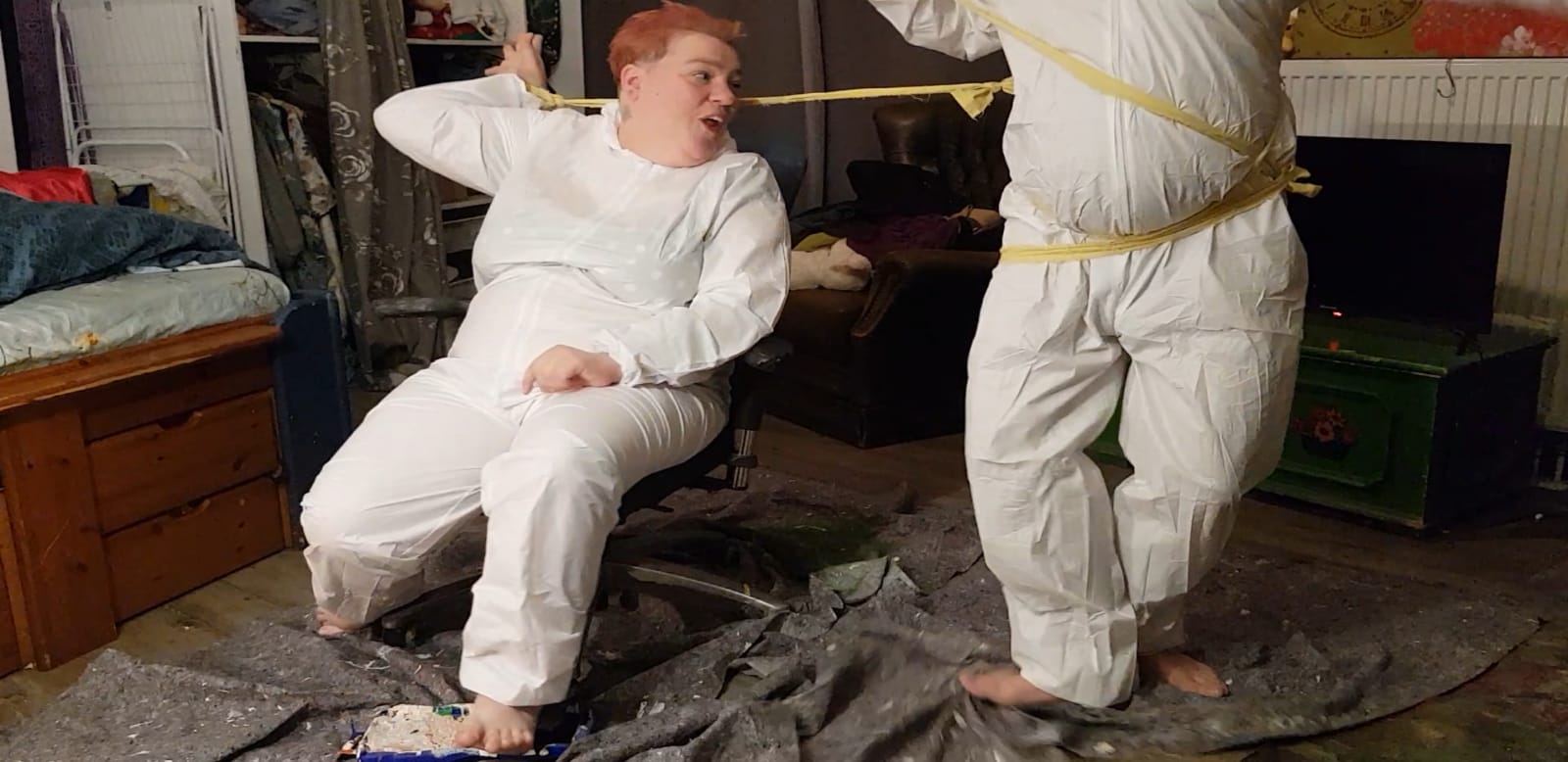
Already the following week after our first meeting I received a touching message about how good it had felt for Hannah to be seen as a woman rather than as a disabled person. She even wrote a song about our meeting: „Idealwert“.
© Thomas Aeffner
How Sexuality Can Change a Life – Hannah’s Path to Confidence and Self-Love
Since then, we have met many times. We have talked about God (well, more about Buddhism) and the world, exchanged thoughts on art and explored sexual fantasies.
“Later the carers examined the marks of a rope on my skin. ‘Bondage,’ I said. Sometimes the bravest word is the most honest one.”
Hannah has since grown into a confident young woman. She participated in an art project where she and I were photographed together in bed. We have appeared together in documentaries and in the award-winning short film Nähe, and we have sat on stage at festivals and professional conferences.
She is writing a book, paints pictures using her feet and the tip of her nose and has become politically active.
She has finally been able to experience that she is lovable, desirable – a young woman with wishes and dreams she wants to live and will live.
Sexuality is one of our strongest driving forces. In this case, it changed an entire life because it was allowed to unfold.
I am proud to contribute to that – for Hannah and for many other women I accompany professionally in their sexuality. After all, that is my work: I am a sex worker.
Hannah herself summarizes her development like this: “For a long time I asked myself: Was I in love? Or was it simply the first time I felt like a desirable woman? He was 70. I felt safe in his arms. Perhaps too safe. Friends spoke of a father complex. I spoke of trust. Perhaps it was neither. Perhaps it was simply the feeling that someone saw my body not as a case for care, but as a body capable of pleasure. And that changes something. Why do we fall in love with the unattainable? I had to see him once more to find out whether it was my heart racing or just my imagination. Four months later I knew: it wasn’t a great love. But it was a great experience. I didn’t fall in love with him. I fell in love with the possibility of being desired.”
What she learned: “I am allowed to feel desire. I am allowed to pay for closeness without being ashamed. I am allowed to set boundaries. I am allowed to be curious. I am allowed to make mistakes. And above all: I am a human being. A woman with a sexuality. Not just a body that needs care. Not just a resident in the last room at the end of the corridor. Not just ‘sweetheart’, ‘angel’ or ‘buttercup’. But Hannah. And my desire is not a taboo.”
Conclusion
Sexuality is closely linked to our self-image, our dignity and our sense of belonging in society. Hannah’s story shows powerfully how deeply these aspects can be intertwined. When people with disabilities repeatedly experience their needs being overlooked or dismissed, it can easily lead to the feeling that there is no place in the world for their desire and intimacy.
Yet the right to sexual self-determination belongs to everyone. Encounters such as the one between Hannah and Thomas can open spaces for touch, trust and the experience of being recognized as a person with wishes and longings. Perhaps the most important insight is that sexuality is far more than a physical act. It can strengthen self-confidence, open new perspectives and help people see themselves differently. That is exactly what Hannah experienced. It was not great love but it was an experience that showed her that her desire, her body and her wishes belong just as naturally to her life as they do to anyone else’s.
About Hannah:
© Thomas Aeffner
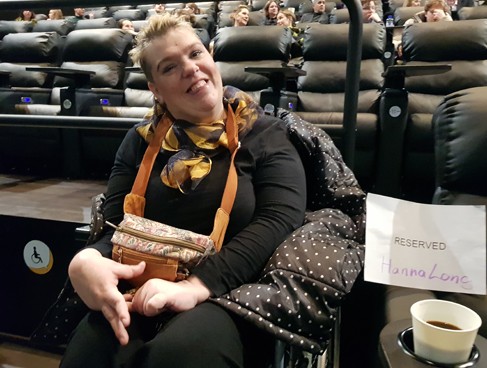
Hannah is in her mid-thirties and lives in a town on the edge of Germany’s Ruhr region. She now lives independently in supported housing, in her own flat. She works as an office assistant in a workshop for people with disabilities. Since birth she has had limited mobility in her arms and legs, and her speech is also significantly affected, which is why she uses an electric wheelchair.
Because of her visible disability, other people apparently do not perceive her as a potential partner – at least she has not yet had success on the “relationship market”. One must take a little time to understand her pronunciation, and few people seem willing to do so.
Yet Hannah has a remarkably creative personality. She paints, writes songs and is working on her first book. Since appearing in the award-winning documentary Nähe, she has also taken part in further projects with the Wuppertal Media Workshop and made new friends there.
She has joined a political party and campaigns in her city for accessibility and inclusion.
This self-confident young woman has also taken the fulfilment of her sexual needs into her own hands. She refuses to be told how women should be sexually, and she refuses to be prevented from advocating for her sexual self-determination as a woman with a physical disability. And as long as people are unwilling to take the time to truly get to know this creative and sensual woman, she fulfils her erotic dreams through professional sexual accompaniment.
The full original chapter ‘The Desire for Nakedness’ by Hannah can be listened to on YouTube.
About the Author:
© Thomas Aeffner
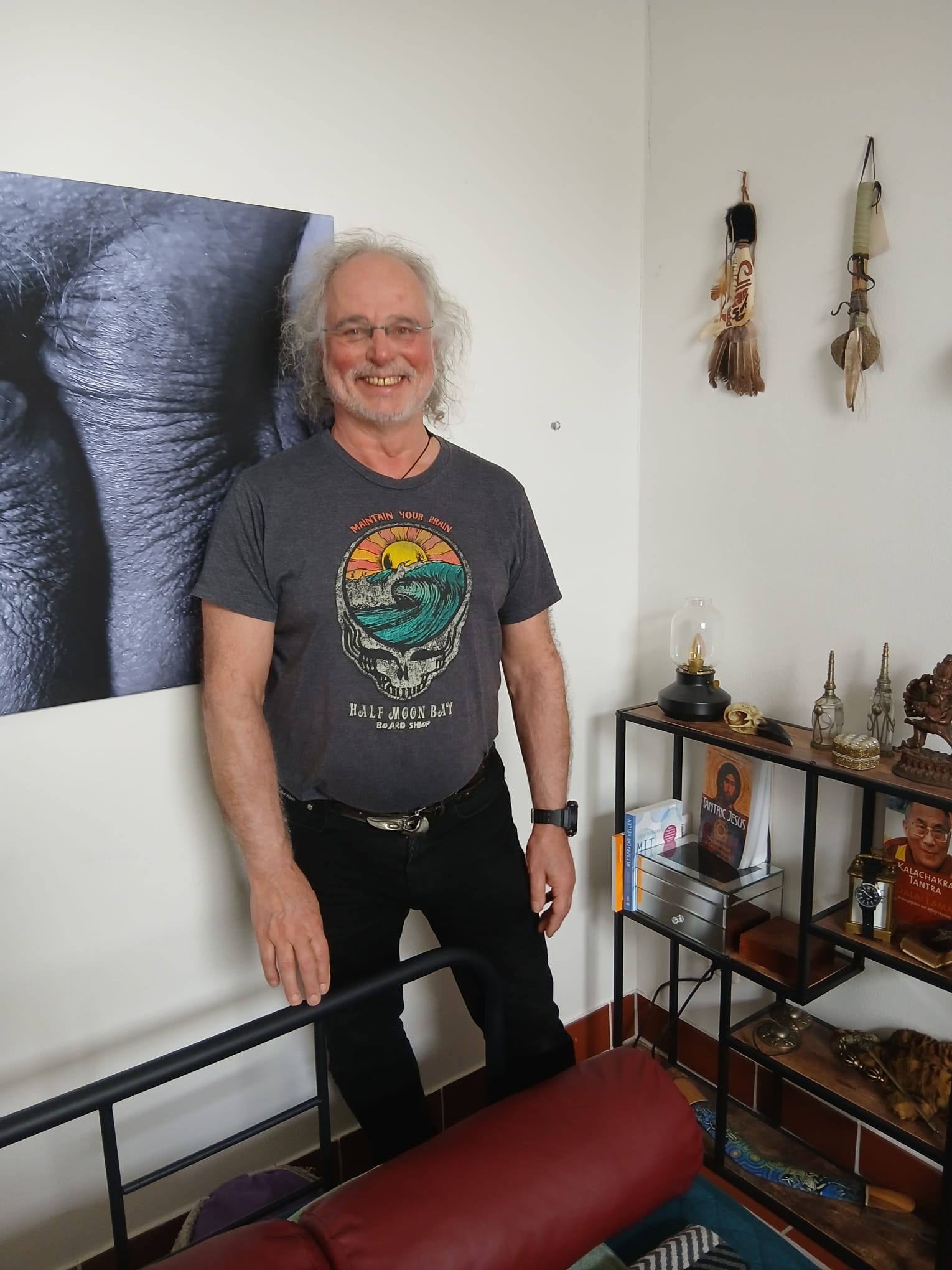
Thomas Aeffner is retired and lives in a rural area near the Dutch border.
Originally a state-certified teacher, he spent most of his life working successfully as an artist. After retiring, he trained first as a tantra masseur and later as a sexual companion. The painter of images became an artist of touch.
Sexual accompaniment and sexual assistance are specialized areas of sex work. Sexual assistants often specialize in working with elderly people and people with disabilities, helping them exercise their right to sexual self-determination when they do not have a suitable partner or require support in doing so. While sexual assistance focuses primarily on satisfying sexual needs, sexual accompaniment also aims at personal development and empowerment.
He says: “Anyone who seriously claims that sex for money is always rape and therefore should be banned has a very narrow worldview and is guided by dogma.”
Aeffner’s work is rooted in respect and care. It helps women unfold and shape their lives – including their sexual lives – as self-determined as possible. One does not have to be particularly old or disabled for this: women with experiences of abuse, women with little or no sexual experience, or women who simply want to do something good for themselves also book his services.
Anyone who has never experienced how empowering a joyful relationship with one’s own body can be often cannot imagine what fulfilling, consensual sex can achieve – how healing it can be for body and soul to truly be seen and accepted as a woman rather than as an ageing or disabled neutral being. And that such caring attention can, if necessary, also be obtained for money – as a professional service.
More information:
https://www.sexualbegleitung-nrw.de/
https://www.aeffner.com/blog