

Tinder Killed Dating – and No One Noticed
10 July 2025
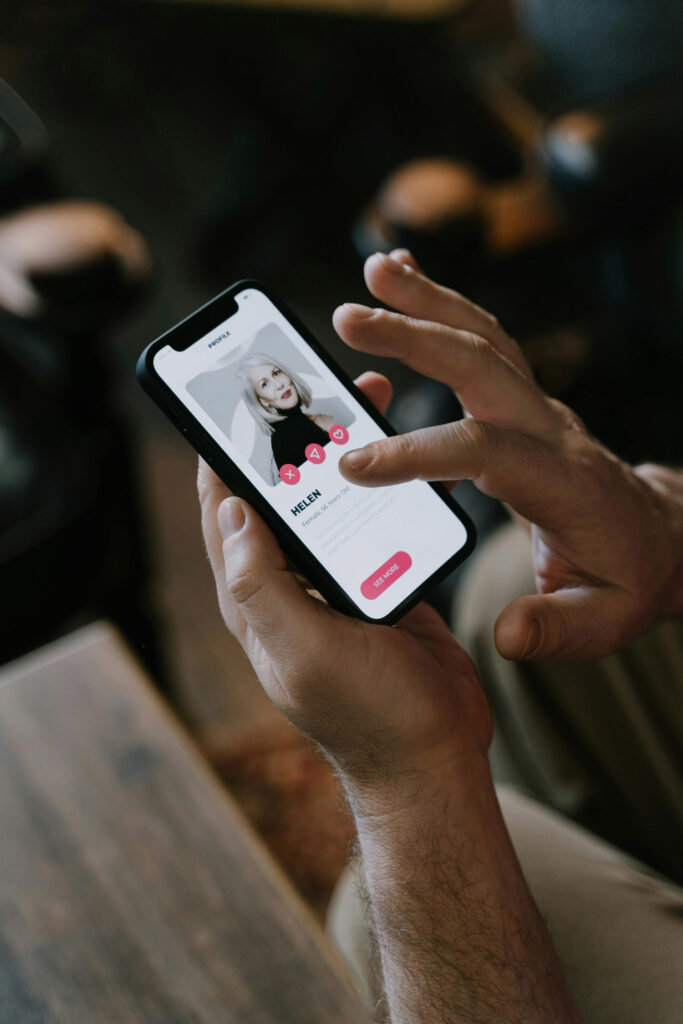
Maybe you’ve noticed it yourself: Modern dating on apps like Tinder doesn’t feel like truly getting to know someone anymore. Instead, it’s more and more about endless swiping. Quickly to the right if you’re interested, quickly to the left if you’re not. This behavior even has its own name: doomswiping.
But what exactly is behind it? Doomswiping happens when you’re actually looking for a genuine connection but end up endlessly scrolling through a flood of profiles without ever making a real decision. And it’s accompanied by a frustrating feeling. Constantly swiping back and forth becomes a habit, and in the end, the whole thing feels more like a chore than a pleasure.
What Is “Doomswiping” Anyway?
The term “doomswiping” refers to aimless and often excessive swiping on dating apps without truly engaging with the people behind the profiles. It’s less about finding a potential partner and more about passing time or seeking entertainment. The word is a blend of “doom” and “swiping.” Many users already expect bad profiles and failed matches, yet they keep swiping, driven by the fear of being alone. Unfortunately, this has been shown to have negative effects on users and, by extension, an entire generation.
Are Dating Apps Actually Bad for Our Relationships?
Instead of fulfilling their original purpose of bringing people together and helping to combat loneliness, dating apps have increasingly shown to have negative effects.
At first, dating apps often feel exciting, and the speed at which you can make social connections is appealing to many users. Meeting new people and dating potential future partners seems to promise only positive outcomes. But over time, studies have shown that dating apps can have many downsides:
- Loneliness, anxiety, and depression: Contrary to their original goal, dating apps can actually increase feelings of loneliness and contribute to mental health issues like anxiety and depression.
- Are committed relationships just an illusion? Constant swiping and many unsuccessful dates can lead to disillusionment when it comes to the idea of a serious relationship. Many users even report dating burnout.
- You lose your self-worth: Constantly comparing yourself to other profiles can lower your self-esteem.
- Harassment and cyberbullying: Cyberbullying and harassment continue to be reported as common negative consequences of dating app use.
- Always looking for potential “matches”: For many users, the search for matches eventually becomes almost addictive.
- Ghosting and rejection: Dating apps make meeting new people fast and easy, but this speed, along with the overwhelming number of potential partners, also increases the likelihood of ghosting and feelings of rejection.
In 2024, Psychiatric Times published a detailed study outlining these negative effects in even greater depth. The study also presented possible solutions, including a call to dating app companies to change their algorithms and features to encourage more meaningful and safer interactions. In fact, signs of change are already emerging among members of Generation Z (those born between 1995 and 2010) as well as among dating app developers.ourage more meaningful and safer interactions. In fact, signs of change are already emerging among members of Generation Z (those born between 1995 and 2010) as well as among dating app developers.
Stories from Everyday Swipe Life
Many users share similar experiences. Take Luisa, 29, for example, who decided to delete Tinder after two years of heavy app usage.
“At some point, it was just a routine,” she says. “I was swiping in the evenings the way others scroll through Instagram, without real interest, without energy.” She describes the feeling of being stuck in a loop: matches, meaningless chats, dates that felt like job interviews, and in the end, nothing.
Tim, 32, also decided to take a conscious break. The emotional pressure became too much.
“I wasn’t myself anymore when chatting or going on dates,” he says. “Eventually, I convinced myself I was just too picky or not attractive enough.” It wasn’t until he deleted the apps that he realized how much they had affected him, especially his self-image.
What both have in common: the desire for genuine connection. For conversations that don’t start with “So, what do you do?” but with real curiosity. For dates that aren’t filtered through a screen but felt through a look, a laugh, a feeling.
Is the Dating Madness Finally Shifting?
As described above, the negative effects can be significant. But signs of a shift are already visible among Generation Z, a shift that points toward more real-life connection. Dating app companies are starting to catch on too:
- The number of dating app users is declining!
For years, dating apps were incredibly popular. And social distancing during the COVID era only fueled the trend. But according to this article, a change has been underway since as early as 2023. Dating app companies are becoming concerned. A 2023 Axios/Generation Lab survey of U.S. college students confirmed a drop in dating app use, especially among Generation Z – the primary target group for dating apps. This generation seems more inclined to meet people in real life again, rather than searching for potential matches online. - Tinder launches new features for more real-life encounters!
Tinder has already tried to make the dating experience more social by introducing features like “Tinder Matchmaker” (which lets friends and family help in the search for matches) and “Share My Date” (a feature to share date details with others). Now, the company is launching another new feature called “Double Date,” which aims to make dating less stressful and more social. You can team up with up to three friends to go on double (or group) dates together. While the feature is still new, early feedback has been mostly positive – and Generation Z, in particular, seems to be responding well to it. - The desire for real-life connection
Generation Z, once again at the center of this shift, is increasingly choosing in-person experiences over digital ones. Meeting people through shared hobbies, existing social circles, or public events is becoming more popular than communicating through apps.
Less swiping, more genuine encounters. And with that, the creation of real closeness among people. That is something we at pjur would love to see for all of you! That’s why here’s our message to you: meet people face to face again, get to know each other in real life, and always treat each other with kindness and respect.
What has your experience with dating been like? Are you still using dating apps, or have you already gone back to meeting people in real life and setting up dates the old-fashioned way? Let us know on Instagram @pjurlove ♥
Image sources: pexels-cottonbro-7341892, pexels-cottonbro-6833565