
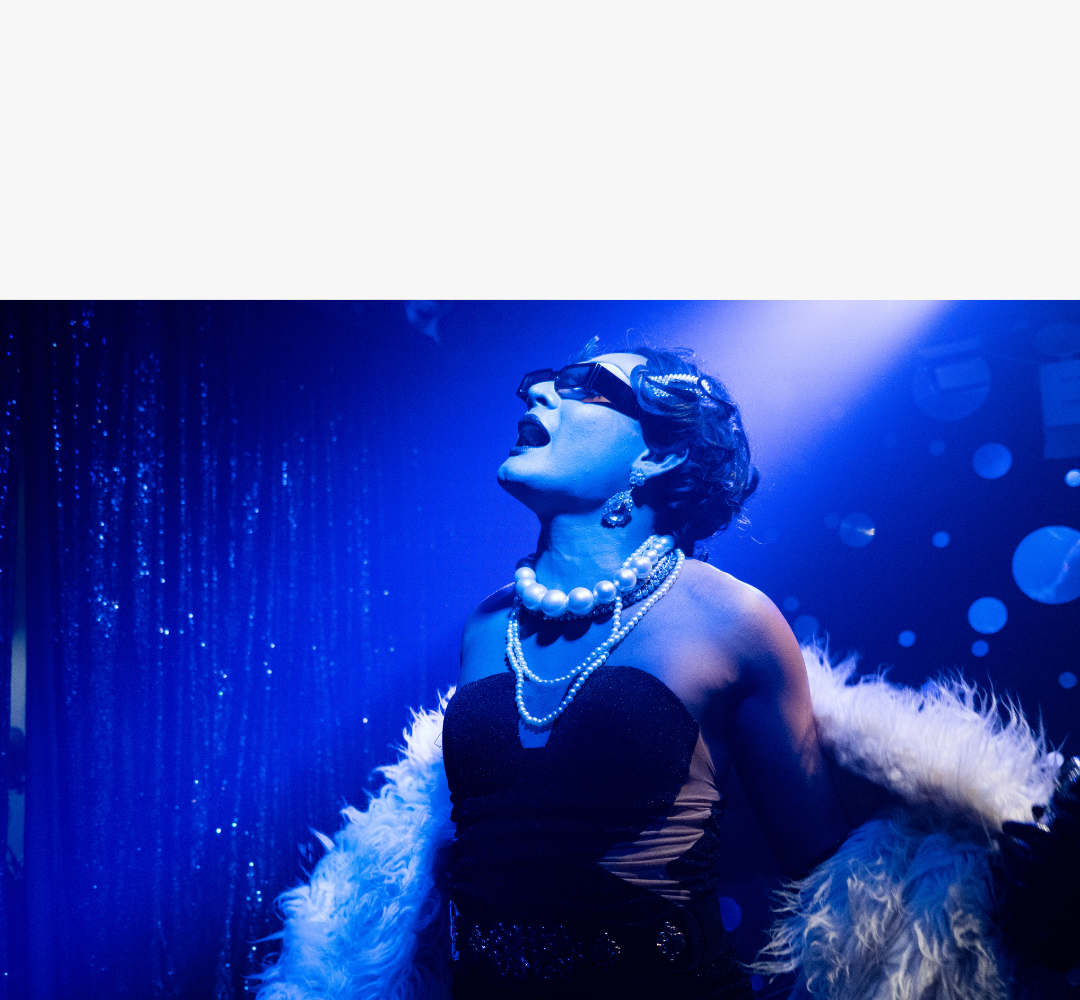
Drag fascinates people and encourages them to think differently. For some, it is dazzling entertainment. For others, it is an art form with a powerful social message. Behind every drag persona is a story, and often a desire to inspire people, create visibility and draw attention to issues that still receive far too little recognition in everyday life.
One person who has been doing exactly that for many years is Margot Schlönzke. As a host, singer, entertainer and activist, she has become one of Germany’s best-known drag queens. With humour, self-irony and a clear sense of purpose, she stands not only on stage but also for diversity, social cohesion and acceptance. We spoke with Margot about how her drag persona came to life, why drag means so much more to her than entertainment, and why visibility is more important today than ever before.
If you would like to learn more about the history and cultural significance of drag, take a look at our blog post The Magic of Drag: Glamour, Self-Expression and Culture.
Who Is Margot Schlönzke?
Anyone who has ever seen Margot Schlönzke on stage quickly realises that there is far more to her than glamorous outfits and flawless styling.
“For me, drag is so much more than glitter, wigs and high heels. It is a wonderful way to draw attention to social problems and negative developments while giving a voice to people who are often overlooked or unheard. Entertainment and taking a stand are not opposites. On the contrary, humour can build bridges and create conversations that might otherwise never happen.”
This combination of entertainment and social commitment runs through everything she does.
How Margot Schlönzke Came to Life
Margot’s story began in a surprisingly modest way. Long before she performed on major stages or hosted events, her name originated from something entirely different.
“At the end of the 1980s, I wrote a satirical school column under the pseudonym of a fictional teacher called ‘Margot Schlönzke’. At that point, there was absolutely no plan for it to become a stage persona one day. My first performances came many years later, and what started as a small idea gradually developed into what Margot Schlönzke is today.”
What began as a humorous school column evolved over many years into one of Germany’s best-known drag personalities. Throughout that journey, one thing never changed: the desire to reach people through humour while encouraging them to reflect.
Why Drag Continues to Inspire
Many people initially associate drag with elaborate looks, extravagant outfits or spectacular performances. For Margot, however, its true fascination lies somewhere entirely different.
“For me, the real fascination comes from the audience and from society itself. Today, a woman wearing trousers hardly provokes anyone anymore but a man wearing a Chanel costume certainly does. That very sense of irritation creates an opportunity to challenge deeply rooted ideas about the world. Capturing people’s attention through an unfamiliar appearance and then using that attention in a meaningful way is what drag is all about for me. I want to give a voice to those who are quiet, overlooked and pushed aside.”
That is exactly where the strength of drag lies. People may stop because of the performance, but they stay because they are listening to a message they might otherwise never have heard.
What Makes a Great Drag Queen?
Perfect styling or elaborate costumes alone are not enough for Margot. What truly matters is the personality behind the performance.
“The first thing is that you must never take yourself too seriously. Self-irony is the foundation. If you cannot laugh at yourself, then, in my opinion, this is not the right profession for you.”
Just as important is having something meaningful to say beyond the outward appearance.
“To be honest, beauty is not what matters most. What really matters is having something to say and encouraging people to think. I also believe that a good drag queen sends the audience home just a little bit wiser than when they arrived.”
For Margot, drag is therefore a constant process of growth. Perfection has never been the goal. What matters is the willingness to keep developing and evolving.
More Than a Stage Persona
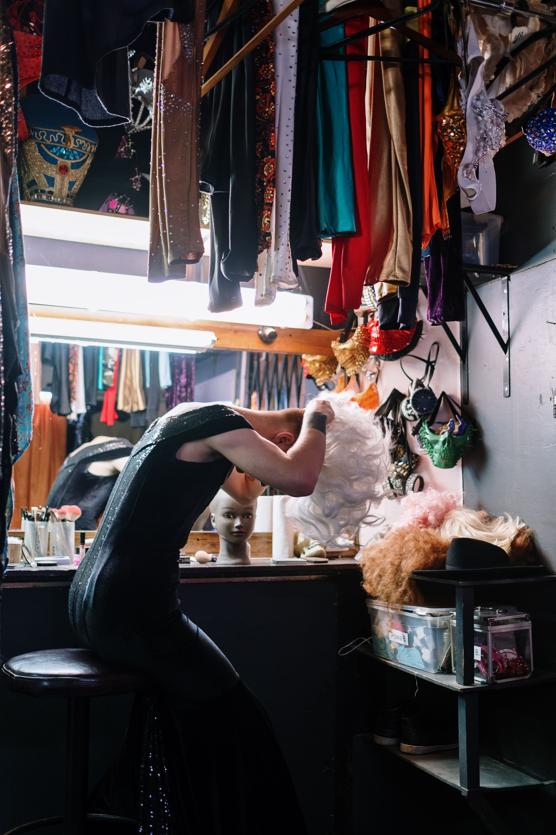
Many people assume that every drag persona is simply a role that disappears the moment the wig comes off. For Margot, things are different. She does not see drag as a fictional character, but as an extension of her own personality. The stage gives her the opportunity to address important topics and comment on social developments with humour. It is this combination of entertainment and a clear sense of purpose that defines her performances.
“Of course, there is a person behind Margot. But Margot Schlönzke is not a fictional character to me. She is me. Drag simply allows me to express certain things more pointedly, more exaggeratedly and sometimes a little more cheekily than I probably would in everyday life.”
For her, humour creates space for conversation. It encourages people to reflect and often makes it easier to address uncomfortable topics. That is precisely where she sees the real strength of drag: capturing people’s attention and using it in a meaningful way.
Visibility Does Not Automatically Mean Acceptance
Drag has become more visible in recent years. At the same time, however, prejudice and hostility towards queer people are once again increasing in many parts of society. In Margot’s view, visibility alone is therefore not enough. It must be accompanied by education, dialogue and mutual respect.
She experiences this reality first-hand. Hate messages, insults and even threats have sadly become part of her everyday life. Yet she refuses to be intimidated and continues to stand up for openness and diversity.
“I receive dehumanising insults, hate messages and even death threats almost every single day.”
For Margot, there is no doubt that queerphobia is a challenge for society as a whole. That is why replacing prejudice with knowledge and encouraging people to engage in conversation is more important than ever. She believes this is also one of the key responsibilities of art: to inspire reflection, broaden perspectives and create space for openness. Drag, in particular, has the power to challenge traditional ideas about gender roles and to show that identity has many different facets.
The freedom to express yourself without fear of rejection or discrimination is not something Margot takes for granted. It is something she believes must be protected and defended time and time again.
What We Can Learn from Drag
Drag is all about challenging expectations. It is not about putting people into boxes but about encouraging them to look beyond them. For Margot, that is exactly what makes this art form so valuable.
Drag highlights something that all of us do every day, whether consciously or unconsciously. The way we dress, the way we present ourselves and the way we communicate are all expressions of our personality. Drag makes this visible and deliberately plays with these conventions.
Anyone who takes a closer look quickly realises that there is much more behind the glittering surface than entertainment alone. Drag can change perspectives, spark conversations and help people approach one another with greater openness and fewer prejudices.
In a time when public debates are often shaped by polarisation, that openness is more important than ever. It begins with something simple: being willing to listen, recognising different lived experiences and accepting people for who they are.
These are values that have accompanied pjur since the very beginning. For pjur, respect means not only making diversity visible, but recognising it as a natural and valuable part of society. That is why pjur appreciates people like Margot Schlönzke, who use creativity, humour and a clear sense of purpose to challenge prejudice and inspire new ways of thinking.
A Piece of Advice That Inspires Courage
To conclude our conversation, we asked Margot what advice she would give to people who may still be hesitant to openly live their identity, sexuality or personality.
“Listen to your heart, not to other people. It is your life, and it is the only one you have. Live it in a way that allows you to enjoy as many moments as possible, rather than wondering one day whether you lived according to someone else’s expectations. You do not have to prove anything to anyone. But you should give yourself the chance to be happy.”
These words reach far beyond the topic of drag. They remind us how important it is to remain true to ourselves and to follow our own path, regardless of what others may expect from us.
And that is perhaps the most important message of this conversation. Diversity grows where people are given the freedom to be themselves. Respect begins where we meet one another with openness.
About Margot Schlönzke
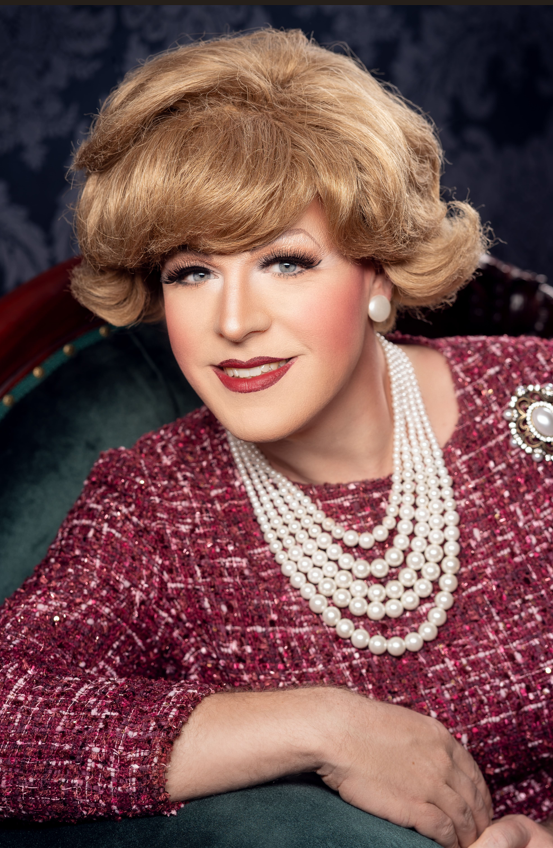
Margot Schlönzke is a host, singer, entertainer, podcaster, drag artist and political activist with heart, humour and a sharp wit. Combining stand-up comedy with intelligence and charm, she has become one of the most recognisable voices within Germany’s queer community. Thanks to her warm, almost maternal presence and her quick tongue, she is often affectionately referred to as “the Mother Beimer of Travesty”.
For more than 20 years, she has been performing while actively advocating for greater visibility and representation within the community.
Margot Schlönzke has been appearing on stage in her current form since 2002. Alongside numerous performances as a singer and actress, she has built a reputation as a committed advocate for queer issues. Her work ranges from full-length stage programmes featuring cabaret, live vocals and hosting, to moderating a wide variety of events with warmth, humour and impeccable timing. One of her greatest strengths is making guests and conversation partners shine while creating an atmosphere that is both entertaining and welcoming.
Website: www.schlönzke.de
Instagram: https://www.instagram.com/margotschloenzke
Facebook: https://www.facebook.com/margot.schlonzke
X: https://x.com/SchloenzkeM
Bluesky: https://bsky.app/profile/margotschloenzke.bsky.social
FAQ
What Role Does Authenticity Play in Drag?
Although drag often involves makeup, costumes and theatrical performance, many drag artists use it as a creative way to express their personality. It is precisely this combination of performance and authenticity that makes drag so unique and meaningful to so many people.
Why Is Drag More Relevant Than Ever Today?
Drag has become increasingly visible in recent years. At the same time, however, prejudice and hostility towards queer people have been rising again in many parts of society. This is exactly why drag creates space for dialogue, encourages people to reflect and stands for openness, diversity and mutual respect. Exclusion often does not begin with obvious discrimination, but in everyday life through stereotypes and seemingly harmless remarks. This is also explored in our blog post about everyday sexism.
Why Is Drag Often Associated with the LGBTQIA+ Community?
Drag has a long history within the LGBTQIA+ community and has always been an important expression of visibility, self-determination and solidarity. At the same time, drag is a diverse art form that can be practised and appreciated by people regardless of their sexual orientation or gender identity.
Can Drag Inspire Social Change?
Art has the power to encourage people to see the world from a different perspective, and that is exactly where the strength of drag lies. Through humour, creativity and performance, drag captures attention and opens up conversations about identity, diversity and social cohesion.