
Some scars are barely noticeable. Others are reminders of surgery, an injury or a period in life when the body has been through a great deal. Yet even long after a wound has healed, scar tissue can continue to change. A scar may feel tight, itchy or firmer than the surrounding skin.
For many people, scar care is therefore about more than improving the appearance of a scar. It is also about relieving sensations of tightness, itching or sensitivity. Ultimately, many simply want their scar to become less noticeable in everyday life. The type of care that may help depends on the characteristics of the scar and the individual needs of the skin. Silicone has an interesting role to play in this context. But what makes this ingredient relevant to scar care? And how do people experience silicone-based products on their skin?
These questions were inspired, in part, by experiences from everyday practice. Birte Schlinkmeier, an oncology nursing specialist at the Bad Oexen rehabilitation clinic, has spent many years supporting women during and after demanding medical treatments. In her work, she has already used pjur med SOFT when caring for different types of scars, from smaller port scars to larger surgical scars. She has consistently received positive feedback, particularly regarding the pleasant skin feel and smooth texture of the product.
These experiences prompted pjur to conduct a three-month product trial together with Birte Schlinkmeier. The aim was to explore whether the positive experiences observed in her work would also be reflected among a wider group of users. Participants’ personal experiences were therefore recorded systematically over three months, with particular attention to skin feel, ease of application and any changes they perceived in their scars.
Why Scar Tissue May Need Special Care
Scars form as the body repairs damaged tissue. The newly formed connective tissue differs from the original skin, which is why scars may feel firmer, less elastic or more sensitive. Itching and a sensation of tightness are also possible.
How a scar develops depends on several factors, including the type of injury, its location and the individual’s healing process. Some scars gradually become flatter and less noticeable, while others remain clearly visible.
Scar care following surgery or a significant injury should generally begin only once the wound has fully closed and a healthcare professional has confirmed that it is appropriate to start. Alongside caring for the skin around the scar, gentle scar massage may also be beneficial. However, massage should only be performed on fully healed tissue and should never involve painful pressure. An individual approach is particularly important when dealing with sensitive scars.
Silicone in Scar Care: How Does It Work?
Silicone has played a role in professional scar management for many years. Silicone gels and silicone sheets specifically developed for scar treatment are used particularly for raised scars. The principle is relatively straightforward: they form a flexible layer on the skin’s surface that can help limit moisture loss. This helps the skin retain moisture, potentially creating more favourable conditions as the scar continues to mature. For suitable scars, and when used appropriately, medical silicone products may help improve the appearance of scars and alleviate certain symptoms. However, the specific formulation matters. Not every silicone-containing product is automatically suitable for medical scar treatment. Its composition, intended purpose and the available evidence supporting its effectiveness are all important considerations.
Silicone, Skincare Oil or Cream: What’s the Difference?
While medical silicone gels and sheets are specifically developed for scar treatment, conventional skincare oils and creams are often primarily intended to care for dry skin and provide a pleasant skin feel. Beyond the ingredients themselves, a product’s texture also matters. Silicone-based formulations can spread smoothly across the skin thanks to their lubricating properties, making application particularly comfortable. Because scar tissue can be sensitive, a gentle approach is important when it comes to scar massage. Not every scar should be massaged with firm pressure. Whether massage is appropriate, and which technique should be used, depends on the stage of healing and the individual sensitivity of the scar.
From Practical Experience to Product Trial: pjur med SOFT in Scar Care
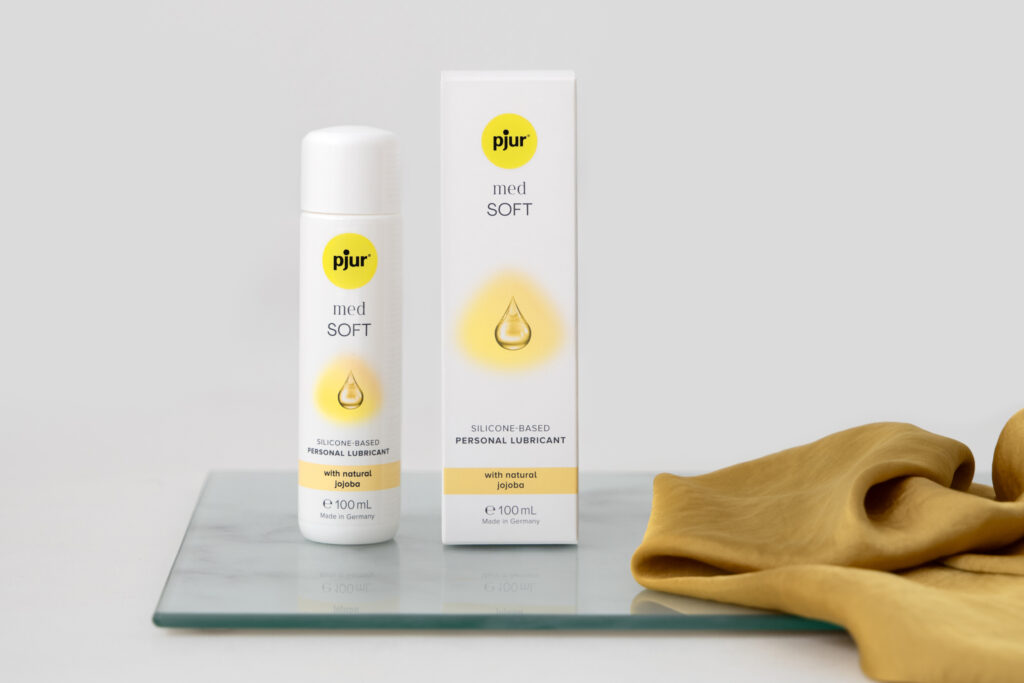
pjur med SOFT is a silicone-based intimate lubricant containing jojoba oil, developed for dry and sensitive skin and mucous membranes in the intimate area. Like all pjur lubricants, it is a certified Class IIb medical device. Its silicone-based formulation, together with the positive feedback from practical use, provided the starting point for a product trial initiated by pjur. The central question was: How would participants evaluate the use of pjur med SOFT on existing scars? The trial focused on participants’ personal experiences. How easy was the product to apply? How did their skin feel afterwards? And what changes, if any, did they notice in their scars?
Inside the Product Trial: Three Months of Scar Care with pjur med SOFT
The product trial lasted 90 days and included two questionnaires: one at the beginning and another after the application period. In between, participants were asked to apply pjur med SOFT to their existing scars up to three times a day and, where possible, gently massage the area.
A total of 48 people completed the initial questionnaire. It gathered information about the origin and age of their scars, their existing scar care habits and symptoms such as itching or tightness. The scars varied in size and age. Almost all participants had surgical scars: for 47 of them, the scar was the result of a surgical procedure. More than half of the scars were at least six months old. Scar care was already part of everyday life for many participants. Before the trial began, 75% reported caring for their scars at least occasionally. At the same time, 73% said their scars frequently or occasionally felt itchy or tight.
After approximately 90 days, 18 people took part in the final questionnaire. Of these, 15 reported using the product once or twice a day, while three described their use as irregular. In addition to application frequency, the final questionnaire explored ease of use, skin feel and possible skin reactions. Participants were also asked whether they had noticed changes in tightness, softness or redness. Their willingness to continue using or recommending the product, as well as their expectations of a scar care product, were also recorded.
What the Product Trial Revealed: Personal Scar Care Experiences
Feedback from the 18 participants who completed the final questionnaire was predominantly positive. Particularly interesting were their experiences of tightness and the perceived softness of their scars. 72% reported that their scars felt less tight during the application period. 61% perceived their scar tissue as softer, while 55% noticed a reduction in redness.
Alongside these perceived changes, the experience of applying the product was another important aspect:
- All 18 respondents rated the product’s ease of use as good or very good.
- 88% described the skin feel after application as pleasant.
- The protective layer on the skin was described as long-lasting.
In their feedback, participants particularly highlighted the straightforward application, the fact that a small amount of product went a long way, and the pleasant skin feel. Some also reported that their scars felt more supple or less tight. Overall, 68% of respondents indicated that they would continue using or recommend pjur med SOFT.
These findings reflect the participants’ personal perceptions. The trial does not establish whether the reported changes were attributable to the product, the accompanying massage or the natural development of scar tissue.
What Really Matters in Scar Care
Beyond individual experiences with pjur med SOFT, the product trial also offered insights into what participants expect from scar care. After all, the immediate sensation on the skin is only one consideration. Equally important is whether a product has the qualities people are looking for and can be incorporated comfortably and easily into everyday life.
For 83% of respondents, skin compatibility was a priority. This was followed by natural ingredients (72%), a neutral scent (61%) and easy dispensing (55%). When asked about a potential future scar care product, participants expressed further preferences: 77% considered medical testing important, 72% favoured a fragrance-free formulation and 66% wanted a resealable tube or pump dispenser.
These responses highlight what participants particularly valued: a well-tolerated formulation, transparent product information and an application experience that fits easily into their personal care routine.
Conclusion: What Matters Most in Good Scar Care
Scars are as individual as the people who carry them. Some change over time, while others remain visible or continue to feel different from the surrounding skin. What matters is therefore not only how a scar looks, but also how it feels and what the skin needs.
The experiences gathered during pjur’s three-month product trial show that participants who completed the final questionnaire particularly appreciated the straightforward application and pleasant skin feel of pjur med SOFT. Some also reported that their scars felt more supple or less tight.
These personal observations offer interesting insights into the application experience, but they do not establish medical effectiveness in scar treatment. Above all, the feedback highlights how individual people’s expectations of scar care can be. It is not always about changing visible marks. Sometimes, caring for a scar is also about getting to know your body better, paying attention to changes and finding a care routine that feels comfortable and suits your personal needs.
Frequently Asked Questions About Scar Care
When Can You Start Caring for a Scar?
Targeted scar care should only begin once the wound has fully closed. Following surgery or an injury, a healthcare professional should confirm when skincare products or scar massage are appropriate.
What Is the Best Way to Care for a Scar?
Suitable scar care depends on the stage of healing, the location of the scar and the sensitivity of the skin. A gentle approach and products appropriate for their intended use are important. If a scar is painful or shows unusual changes, professional medical advice should be sought.
How Long Should You Continue Scar Care?
Scar tissue often continues to change over many months, sometimes for more than a year. There is no universally applicable duration for scar care. How long a particular approach remains useful depends on the scar and the product being used.
How Does Scar Massage Work?
Scar massage involves gently touching or mobilising fully healed scar tissue. The aim is to work with the tissue without causing pain or excessive friction. Particularly after surgery, the appropriate technique should be discussed with a healthcare professional or qualified therapist.
What Can Help with Tight-Feeling Scars?
A sensation of tightness may be related to the particular structure of scar tissue. Depending on the cause, suitable skincare or professionally guided massage may be considered. Persistent, worsening or painful symptoms should be assessed by a healthcare professional.
Why Do Scars Sometimes Feel Hard?
Scars consist of newly formed connective tissue that is structured differently from undamaged skin. As a result, they may feel firmer or less elastic. Their texture can continue to change as the scar matures.
How Can You Keep Scars Supple?
Suitable skincare can help care for dry skin around a scar. Gentle touch or individually adapted scar massage may also form part of a care routine. However, perceiving a scar as softer does not necessarily mean that the scar tissue itself has objectively changed.
What Are the Benefits of Silicone in Scar Care?
Medical silicone gels and silicone sheets specifically developed for scar treatment form a layer on the skin’s surface and can help reduce moisture loss.
Is Oil Suitable for Scar Care?
Skincare oils can help care for dry skin and make gentle touch more comfortable. Whether a particular oil is suitable for a scar depends on its formulation and individual skin tolerance.
Can You Care for Older Scars?
Yes. Older scars and the surrounding skin can also benefit from appropriate skincare. For example, suitable products can help keep dry skin supple. However, if a scar becomes painful, swollen or shows unusual changes, it should be assessed by a healthcare professional.
Medical Disclaimer
The content of this article is intended solely for general information and educational purposes. It has been prepared with the utmost care but does not replace individual medical advice, examination or diagnosis. If you experience health problems, have questions about sexually transmitted infections or are concerned about a possible risk of infection, you should seek medical advice. Medical knowledge and recommendations may change over time.